
The Inner Child at Back-to-School Night

By: Melissa “Dr. Mel” Robinson-Brown, Ph.D. Founder & Senior Psychologist, Renewed Focus Every August, without fail, I pull up the school supply list and go into full-on operation mode. Not the casual, “grab a few folders and call it a day” kind of shopping. I mean line by line. Every glue stick. Every specific brand of pencil. Every last item, accounted for, checked off, done. Knock-off options? Nah…those didn’t exist. Back-to-school night hits the same nerve. I don’t just show up. I show up. I make sure the teacher sees my face, and – I’ll admit it – there’s a part of me that introduces myself as Dr. Mel in that room, not just “Mom.” Some part of me wants the room to clock, early, that this child has someone in her corner who is knowledgeable, watching, and involved. When I trace that instinct back, it lands on my own mother. She was the mom who volunteered to supervise lunch duty once a week. She was the one who showed up when a little boy in my class wouldn’t leave me alone. The little stinker punched me in the stomach once and then had the nerve to do it again even after my mother warned him. But I was sure to tell her after the second time and he never touched me again. Every teacher in that building knew her face and knew she was watching. That memory is genuinely comforting to me. It wasn’t dysfunction. It was love, presence, and protection – and it worked. I felt safer because she was in that building. I sat with this for a while trying to decide where my own back-to-school habits were coming from and whether or not they were connected to childhood experiences. Of course they were, but not in a way that suggests harm. But rather, repeating something that felt warm and loving and wanting to pass it on to my own children. But it also reminded me that inner-childhood experiences, whether they created wounds or protection, are likely to resurface in some way at this time of year. This Pattern Is Real – Just Not Where I Expected to Find It Writing this made me think a lot about so many of the women I work with. Many of the high-achieving women I see were “the smart one.” The kid whose intelligence got noticed early – and because of that, got sent across town. A better school. A more resourced school. A school that was majority white when they were the only Black girl in the room. A school that could “nurture the potential.” On paper, that’s a gift. And it often was. But it came with rules that their moms and grandmothers said often, loudly, and firmly: Don’t stand out – unless it’s for being excellent. Don’t give the school a reason to call home. Blend in enough that nobody asks too many questions about where you come from, what your house looks like, or what your family can and can’t afford. That’s not a supply-list wound. That’s childhood trauma with a backpack on – the very real weight of being a kid who had to represent well before they even understood what they were representing. And that backpack doesn’t stay in childhood. It shows up in the boardroom when you over-prepare for a meeting nobody else is losing sleep over. It shows up in relationships when you can’t just be average at something without spiraling. And it shows up right here, right now – in a Walmart aisle at 9pm, re-checking a list you’ve already checked twice –because some part of you is still making sure nobody has a reason to call home. That backpack usually turns into over-functioning because some part of you is trying so hard to comfort the little girl inside who felt sad, longing, or hurt by what she didn’t get, or what she had to endure. Moments like this can feel like your chance to finally rewrite that story for her. But without noticing it, that same instinct can end up doing more harm than good. Why September Can Quietly Reopen It Here’s the thing about trauma triggers and parenting triggers alike: they don’t need your exact childhood to repeat. They just need the same ingredients – an institution, an authority figure, evaluation, the feeling of being watched and measured. School start-up hands you all of it at once. New teacher. New building. New set of eyes deciding, in real time, whether your kid is “fine” or a “concern.” You know what this actually feels like in the body. It’s 11:47 pm and you’re refreshing the school portal for the third time, even though nothing new has been posted since 4pm. Your jaw is tight. You’ve been planning your child’s outfit and hairstyle for the last 4 weeks. You need them to show up with their best foot forward. You’re scanning for your child’s teacher’s name to assure it’s one of the “good ones.” Suddenly tension starts building because the performance of involved perfect mom might be trying to take up space in your life again and you KNOW it’s exhausting. And it’s not just an evaluation of your kid. Sometimes those wounds get transferred to your thoughts about your child. The questions start stacking up fast: Did I choose the right school? Do I need to sacrifice more to send them to the expensive private school, even if their public education is solid? Will teachers know that I’m involved? Do I need to make sure I’m at back-to-school night, so teachers see my face? Will my child understand that they’re being watched differently? How much do I remind her? Will that make my child anxious? For the woman who spent her own childhood managing that exact dynamic – be exceptional, don’t stand out for the wrong reasons, don’t let anyone find a reason to call home – it makes sense that the first week of school can quietly reopen something old. Not always as a memory. Sometimes just as an unexplainable tightness in your chest when the teacher’s email lands in your inbox. That tightness has a name: back-to-school anxiety wearing a very familiar disguise. It’s essentially school trauma showing up as emotional triggers in a body that never got the chance to fully put it down. A Note on Guilt (Because It Will Show Up) I want to be careful here, because I know not everyone reading this had the “smart one sent across town” story, and not everyone has the bandwidth to show up to every school event the way my mother did, or the way I try to. That guilt makes sense, by the way. If you grew up watching
Back-to-School Triggers: When August Brings Up Old Anxiety, Shame, or Fear
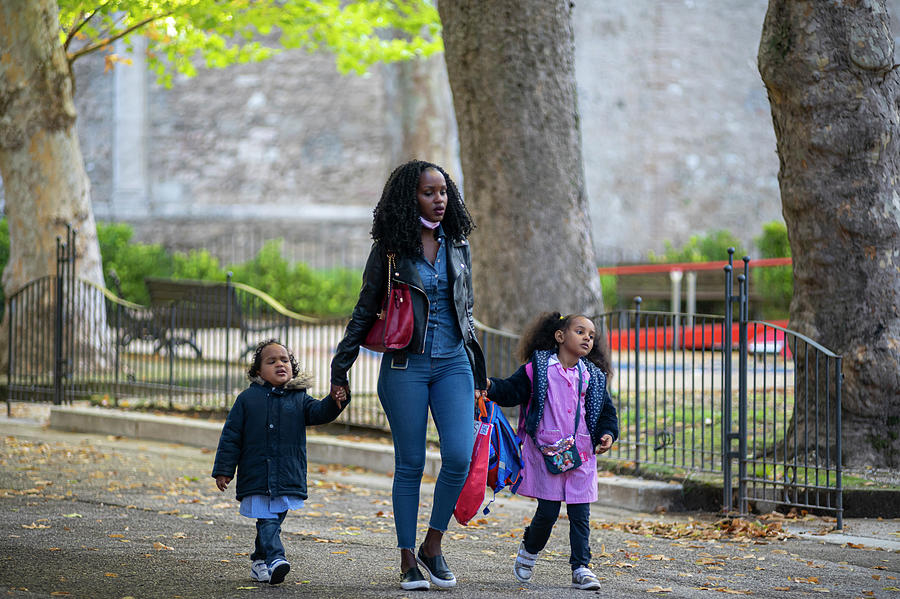
by Melanie Gibbons, LPC August has a very specific energy. The school supplies appear. The emails start rolling in. Target starts looking like a war zone with glue sticks. Parents are trying to remember who needs sneakers, who needs a physical, and why every teacher needs a different kind of folder. And for some parents, it is not just “back-to-school stress.” It is something deeper. As a therapist, I have learned that the thing people call “stress” is often carrying more history than they realize. Sometimes what looks like overreacting, controlling, shutting down, or spiraling is actually a trauma response showing up in a very normal-looking moment. Back-to-school season can be one of those moments. Maybe you hear the phrase “new school year” and your stomach tightens. Maybe the smell of pencil shavings, school hallways, or fresh notebooks brings up a feeling you cannot quite explain. Maybe seeing your child prepare for school stirs something in you that feels bigger than the actual moment. You are not being dramatic. You are not “making it a thing.” And no, this does not mean you are secretly mad at composition notebooks. Sometimes August activates old emotional material. Anxiety. Shame. Fear. Memories of not belonging. Memories of being bullied. Memories of academic pressure. Memories of being misunderstood, overlooked, embarrassed, or unsafe. That is what trauma triggers can do. They take something happening now and connect it to something your body remembers from before. Very rude, honestly. But also, very human. Trauma triggers are not always obvious When people hear the word “trigger,” they often imagine something huge and dramatic. A clear memory. A panic attack. A full emotional collapse in aisle seven. And yes, triggers can look like that. But many trauma triggers are quieter. Sneakier. More annoying. They can look like: Trauma does not always announce itself with a flashing sign that says, “Hello, this is connected to childhood.” Wouldn’t that be helpful? Instead, it often shows up through your body, your reactions, your assumptions, and your need to protect yourself. So, when August rolls around and you find yourself feeling unusually anxious, controlling, emotional, or disconnected, it may not just be about school calendars and supply lists. It may be your nervous system recognizing something familiar. Shame loves a familiar doorway For a lot of people, school was not just school. It was the place where they learned how to compare themselves. Where they learned who got praised, who got ignored, who got labeled “too much,” “too quiet,” “not trying hard enough,” or “dramatic.” It may have been the place where you learned to perform. Be good. Be smart. Be easy. Be likable. Don’t mess up. Don’t need too much. Don’t get in trouble. Don’t draw attention. Don’t be weird. Exhausting. Now here August comes and it can tap into old shame. Not because anything terrible is happening now, but because your system remembers what it felt like to be evaluated, watched, judged, or misunderstood. That can show up as anxiety, perfectionism, irritability, or that very fun spiral where you convince yourself that if one thing goes wrong, everything will fall apart. Shame is sneaky like that. It does not always say, “I feel ashamed.” Sometimes it says: “I should have handled that better.” “Why am I like this?” “Everyone else seems fine.” “I’m already failing.” “I need to get this under control.” And suddenly, you are not just responding to August. You are responding to every version of you that learned they had to earn safety by getting it right. A couples therapist lens, because relationships feel this too As a couple’s therapist, I also see how trauma triggers do not stay neatly inside one person. They show up in relationships. One partner may become anxious and controlling. The other may shut down or feel criticized. One parent may want to email the teacher immediately, while the other says, “Can we please not make this a whole thing?” And now the original issue is not even the issue anymore. Now the couple is arguing about tone, urgency, who cares more, who is doing more, and why nobody replaced the lunchbox that smelled suspicious in June. Underneath that conflict, there is often fear. Fear of failing your child. Fear of being judged. Fear of not being supported. Fear of history repeating itself. That is why a trauma-informed lens matters. It helps us stop asking, “Why are you acting like this?” and start asking, “What feels threatened right now?” That question changes the whole conversation. How to know if August is activating old stuff Here are a few signs that what you are feeling may be connected to trauma or old emotional wounds: Your reaction feels bigger than the current situation. You feel suddenly young, powerless, embarrassed, or unsafe. You are having a hard time calming down even after the problem is handled. You feel an intense need to control every detail. You feel shame or panic around being judged. You are overthinking interactions with teachers, parents, or other adults. You feel protective of your child in a way that feels urgent or consuming. You notice memories or body sensations from your own childhood coming up. None of these automatically mean something is “wrong” with you. They mean something in you may need attention. And probably gentleness. Because shaming yourself for having a trauma response is like yelling at a smoke alarm for making noise. The noise is annoying, yes. But it is trying to tell you something. What actually helps First, slow down. I know. Annoying advice. Very therapist of me. But seriously, trauma responses often move fast. Your body reacts before your brain has time to organize the information. So, before you send the email, start the argument, create the spreadsheet, or spiral into a full identity crisis over a school form, pause. Ask yourself: What am I feeling in my body? What does this remind me of? How old do I feel right now? Is this about what is happening, or what this situation is bringing up? What do I need in this moment to feel grounded? You do not have to answer perfectly. You are not taking a quiz. Nobody is grading your nervous system. The goal is to create a little space between the trigger and the reaction. That space is where choice begins. Try separating then from now One simple grounding tool is
Mother’s Day Pressure: Why This Holiday Hits So Hard
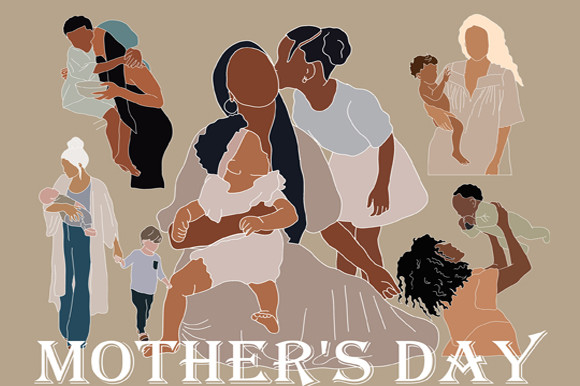
by Autumn Colon Mother wounds, grief, and the emotional weight many women carry into Mother’s Day Mother’s Day has a way of finding tender places. Even before the actual day arrives, something begins to shift. The advertisements start. The flower promotions. The matching pajama photos. The captions about unconditional love and gratitude. And quietly, for many women, something tightens in the chest. Because Mother’s Day doesn’t just ask us to celebrate motherhood. It asks us to confront our relationship with it. The ways we’ve experienced it, longed for it, struggled within it, grieved through it, or tried desperately to survive it. As I’ve gotten older, I’ve noticed that holidays often act as emotional mirrors. They reflect the things we haven’t fully made sense of yet. And Mother’s Day tends to hold many layers at once: love, grief, resentment, longing, guilt, tenderness, pressure. Sometimes all in the same breath. And while Mother’s Day is often marketed as a celebration, for many women it can feel more like a mirror, reflecting back relationships, losses, expectations, and identities that feel far more complicated than a greeting card can hold. Because this holiday doesn’t just touch mothers. It touches daughters. Women grieving mothers. Women grieving children. Women longing to become mothers. Women questioning whether they want motherhood at all. Women carrying the quiet pressure of a world that still often treats motherhood as the defining measure of womanhood. And that emotional weight can surface in deeply personal ways. I’ve sat with mothers who spent the day surrounded by family yet felt deeply alone. Women grieving mothers who are still alive, but emotionally unreachable. Daughters trying to force closeness where there has only ever been distance. Mothers quietly overstimulated and emotionally exhausted while still trying to make the day beautiful for everyone else. Grief, gratitude, belonging, longing; the holiday has a way of bubbling it all to the surface. The Quiet Performance of Motherhood One of the hardest things about Mother’s Day is the expectation attached to it. There’s an unspoken script many women feel pressured to follow. Be grateful. Be fulfilled. Be present. Enjoy every moment. Don’t make it complicated. But motherhood is complicated (trust me; I’m in the trenches with you). You can love your children with your whole heart and still feel overwhelmed by the constant emotional labor of caring for everyone else. You can feel grateful and exhausted. Needed and invisible. Deeply connected and completely disconnected from yourself at the same time. That contradiction doesn’t make you ungrateful. It makes you human. I think many mothers quietly spend Mother’s Day trying to convince themselves they should feel differently than they actually do. And that emotional performance can be exhausting. When the Mother Wound Shows Up For some women, Mother’s Day doesn’t just bring up motherhood. It brings up the ache of being mothered. The relationship with your mother may have been loving, inconsistent, critical, emotionally distant, or difficult in ways that are hard to explain to people who only see the surface. This is often where the mother wound quietly rises to the surface. Not always dramatically. Sometimes it shows up subtly. A heavy feeling while scrolling social media. Irritability you can’t place. The dread of making a phone call you don’t emotionally have the capacity for. Buying a card that doesn’t fully reflect the relationship you actually have. The grief of realizing you’re still longing for something you may never fully receive. I’ve worked with women who feel guilty for needing distance from their mothers while simultaneously grieving the closeness they wish existed. Women who became caretakers emotionally long before they were ever cared for themselves. Mother’s Day can intensify those contradictions. Because this holiday often centers on the idea that mother-daughter relationships are naturally soft, nurturing, and uncomplicated. And for many women, that simply hasn’t been their reality. The Women Mother’s Day Leaves Out One of the hardest things about Mother’s Day is how narrowly womanhood is often framed within it. The holiday tends to center one version of femininity: nurturing, fulfilled, maternal, and celebrated. And for women whose experiences fall outside of that narrative, the day can feel quietly alienating. I think about the women who wanted children and could not have them. Women grieving miscarriages no one fully acknowledged. Women navigating infertility while surrounded by celebration. Mothers grieving children they’ve lost. Women estranged from their children. Women who chose not to become mothers and still feel the weight of society asking them to explain why. And I think about how many women spend this holiday questioning themselves in silence. Because beneath Mother’s Day is often a deeper cultural message: that motherhood is what completes a woman. That nurturing should come naturally. That fulfillment should live here. But womanhood has always been more expansive than one role, one path, or one story. As a therapist, I’ve seen how much shame women carry when their experiences don’t align with the version of motherhood the world celebrates most comfortably. And I think many women need permission to understand that grief, relief, ambivalence, longing, peace, sadness, or uncertainty can all coexist here too. No one should have to perform belonging on a day that already feels emotionally loaded. You Don’t Have to Perform This Holiday This Mother’s Day, I encourage women to pay attention to what they need emotionally instead of focusing only on what’s expected of them. For some women, that means creating space for celebration and connection. For others, it means allowing the day to be quieter, slower, or more protected. When I sit with women around Mother’s Day, I encourage them to make meaning of their own personal connection with womanhood, motherhood, mothering, and identity. Sometimes we talk about boundaries. Sometimes we talk about grief. Sometimes we talk about disappointment, guilt, resentment, or exhaustion that has gone unnamed for too long. And sometimes, the work is simply giving yourself permission to stop pretending the day feels easier than it does. I think many women carry an invisible pressure to make everyone else comfortable with their emotional experience. To soften it. To explain it away. To minimize what hurts. But you do not have to abandon yourself to make a holiday feel more palatable for other people. Sit with this…you are allowed to move through Mother’s Day honestly (period). That honesty may look like stepping away from certain conversations. It may look like grieving. It may look like letting yourself enjoy parts of the day without forcing joy into all of it. It may look
Love Beyond Romance: What Motherhood Teaches Us About Love

by Autumn Colon When we talk about love, we almost always mean romance. Partnership. Marriage. Desire. Being chosen. But not all love is romantic. And motherhood will teach you that quickly. Motherhood shifts the way you experience love, not just toward your children, but toward your partner, your community, and yourself. It forces you to confront what love actually looks like when it’s tired, stretched, and responsible for more than just chemistry. Motherhood is not just a new role. It’s an identity shift. Psychologists call this matrescence, the developmental transition into becoming a mother. And like any major transition, it reshapes relationships. Sometimes quietly. Sometimes dramatically. The Relationship with Yourself The first relationship that changes in motherhood is often the least discussed: the one you have with yourself. Many mothers describe feeling like they “lost” who they were. Not because they regret becoming a parent, but because their needs slowly moved to the bottom of every list. Time, body autonomy, career identity, rest — all renegotiated. Recognizing this, holding this truth does not mean you have regrets about your children or the new role; it simply means, you are human. In therapy, I often ask mothers a simple question: Where did you go? Not in a dramatic way. Just gently. Somewhere between managing schedules, anticipating needs, and holding emotional labor, many women stop checking in with themselves. The disconnection between mind, body and living life has become the norm that loving self just feels like another thing to add to the never-ending list. So, you do nothing, say nothing, and sit with it. Burnout thrives in that silence. One exercise I use with clients is mapping energy instead of time. Instead of asking “What do you need to get done?” we ask, “What depletes you? What restores you?” Often the depletion column is long and unquestioned. The restoration column is short, sometimes blank. Rebuilding love of self in motherhood isn’t about luxury. It’s about regulation. It might mean: If you’re wondering where to begin, try the non-negotiable list as your first stop. That list is your anchor, and nothing comes before ensuring your non-negotiable (a.k.a your baseline) has been tended too. Love that excludes you will eventually exhaust you. And we’re not doing that, sis. We’re no longer self-sabotaging in the name of motherhood. The Relationship with Your Partner Romantic love shifts under the weight of responsibility. Parenthood exposes inequities in labor, communication gaps, and unspoken expectations. Intimacy changes. Time changes. Desire changes. And for many couples, the shift feels personal when it’s actually structural. This isn’t sad or discouraging. This is reality. Love changes. And it should; as you move throughout life, there will be many changes in you, your partner and your relationship. The sweet spot is making sure throughout those changes you find your way back to each other. In sessions with couples, I often help them move from accusation to clarification. Instead of “You never help,” we explore, “What does support look like to you?” Instead of assuming alignment, we define it. Motherhood changes both partners. But it’s not always at the same pace. Love after children requires intentional recalibration. One practice I suggest is a weekly “state of us” check-in — not about logistics, but about emotional temperature. How are we feeling? Where are we disconnected? What feels unbalanced this week? The love may take a new shape, they may see you in a new light, you may wake up and say, how did we get here. These questions don’t always mean the love is lost, it’s still love. It’s just maturing. The Relationship with Community Motherhood also reshapes friendships and family relationships in ways that can feel subtle at times — and seismic over time. Some friendships deepen because they can hold your new reality. Others drift because the rhythms no longer align. They say motherhood shows you the truth of who your true friends and village are. Your needs change. You may need more flexibility. More emotional safety. More understanding around time and energy. You may find yourself less interested in surface-level connection and more protective of where your vulnerability goes. Some friendships deepen because they can hold your new reality. They adjust with you. They grow with you. Others feel strained; not from absence of love, but from a shift in season and capacity. And then there’s family. Parenting can resurface old dynamics quickly. Especially if you’re choosing to raise your children differently than how you were raised. Boundaries that once felt unnecessary suddenly become essential. Conversations you once avoided feel unavoidable. Many mothers quietly grieve here — not because they don’t love their people, but because loving well now requires clarity. Love in community doesn’t mean constant access, shaky boundaries or overextending yourself for the sake of “this is my mother/best friend/aunt, I’m expected to show up this way”. It doesn’t mean enduring dynamics that exhaust you. Look for mutual respect and room to grow. In my work, I often encourage mothers to audit their support systems without guilt. Not to cut people off impulsively, but to assess alignment. I ask questions that help you get a clear understanding of the people you love that you want with you during this phase of your life. Who feels safe? Who respects your parenting choices? Who allows you to evolve? Where do you feel like you have to shrink? And here’s the part that matters: motherhood may be a significant part of who you are, but it is not all of who you are. If every relationship only engages you as “mom,” the other parts of you begin to fade. The friend. The thinker. The creative. The woman with evolving interests and boundaries. A healthy community makes room for those parts and if not, in the words of Moses “let those people GO!” This means redefining closeness. Sometimes it means strengthening the relationships that can expand with you. Sometimes it means intentionally building new connections that reflect who you are becoming; not just who you’ve always been. Isolation increases burnout. But so does staying in proximity to people who cannot meet you where you are. The goal isn’t more people. It’s relationships where love continues to thrive — because you are allowed to grow inside of it. When Love Starts to Feel Like Labor There are seasons in motherhood when love feels expansive. And there are seasons when it feels like work. Burnout changes the emotional tone of everything. You can still care deeply and feel exhausted by the caring. You can still be devoted and quietly resent how much is required of you. Many mothers internalize this as guilt: But burnout is not a reflection of your capacity to
Co-Parenting When Kids Head Back to School: Tips, Tricks, and Keeping Your Sanity

Alright, it’s that time again—the summer’s winding down, Target is packed with families on a mission, and our social media feeds are about to be flooded with first-day-of-school pics. (You know the ones. Backpacks bigger than the kids, grinning faces, and the “Can you believe they’re in 3rd grade already?!” captions.)