
by Melanie Gibbons, LPC
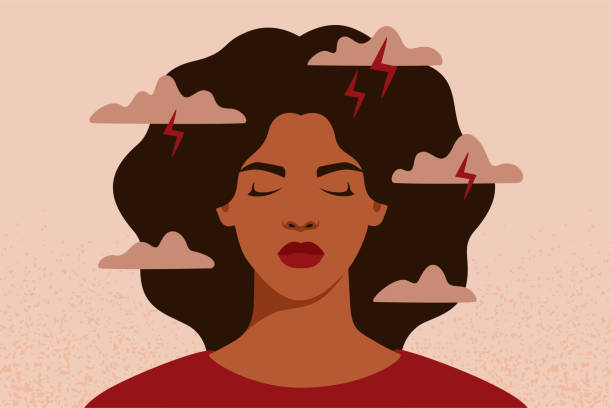
It’s Mental Health Awareness Month, which means the internet is doing what it does best: posting inspirational quotes over sunsets and telling you to “choose joy.”
Respectfully… no.
If healing were as simple as “choose joy,” your nervous system would be thriving, and nobody would be crying in their car before walking into Target. Yet here we are.
So, let’s talk about what we get wrong about healing. Not in a textbook, diagnose-you-from-across-the-room way. More like a “let me grab you real quick” way.
Because in real life, healing is not a montage. It is not linear. It is not aesthetic. And it definitely does not come with before-and-after pictures.
1) We think healing is supposed to be fast
We live in a “two-day shipping” world, so of course we expect emotional progress to arrive quickly, neatly packaged, with a tracking number.
Except healing does not work like Amazon.
Healing is usually a series of small repairs repeated over time. It looks like noticing your patterns sooner, recovering faster, and making different choices even when your body wants to hold onto the old ones.
And yes, this shows up in relationships too. A lot of couples expect one “big talk” to undo years of disconnection, but real change is usually much quieter and more consistent than that.
2) We assume healing should feel good
People think healing should feel like relief, peace, clarity, confidence, and glowing skin. And sometimes it does.
But a lot of the time, healing feels like discomfort, grief, awkwardness, and realizing you’ve been coping in ways that made sense then but hurt now.
It can feel like you are learning a new language with your non-dominant hand. Slow. Clumsy. Necessary.
I always say: If therapy feels good all the time, you are probably doing it wrong. My clients do not love me all the time. Because I help them process the hard stuff and show them where they repeat patterns that no longer serve them, many times my clients down right hate my guts. And that is fine by me. Because that is when I know we are getting somewhere.
So, if healing feels hard sometimes, you are on the right track. You’re doing the actual work.
3) We treat setbacks like proof we’re failing
A lot of people think healing is a straight line. You start therapy, you grow, you never get triggered again, and you become a serene person who drinks water and handles stress like a monk.
Again… no.
Healing looks more like two steps forward, one step sideways, and then a random Tuesday where your nervous system chooses chaos.
A setback doesn’t erase your progress. It’s just a moment when your old wiring showed up. The win is how quickly you notice, repair, and return.
4) We think “healthy” means never struggling
So many people believe that if they are still anxious, still sensitive, still triggered, still emotional, they must not be healing. Like, what has all this work even been for?
But struggling isn’t the opposite of healing. Sometimes it is the doorway into it.
The goal isn’t “never feel activated.” The goal is to build enough internal safety that activation doesn’t run your life.
This is true in individual healing and also in relationships. Healthy couples don’t try to escape every hard moment. I teach my couples that avoiding conflict does more harm than good in the long run. Arguments are necessary. And the healing is learning how to come back to each other after them.
5) We think healing is purely personal
Healing is not just what you do alone in your journal.
It also happens in relationship with others, especially if your wounds were formed in relationships.
Your nervous system was shaped by people. Which means healing often includes learning how to ask for support, set boundaries, tolerate discomfort, and stay connected without abandoning yourself.
That is why therapy can be so powerful. You get a space where your patterns can be seen clearly and practiced differently, instead of just understood intellectually.
6) We confuse insight with change
Let me say this with love: awareness is not the finish line. Again, for the people in the back?
You can understand your triggers, coping strategies, attachment patterns, and trauma responses, and still repeat the same pattern on Thursday at 7:42 pm when life pokes you in the wrong spot.
Insight is important. But healing requires practice.
Healing is building the skill that kicks in when your nervous system is activated. It’s learning how to do something different even when your body wants to do the old thing.
7) We think healing means we should be “over it” by now
This one is personal for a lot of people.
The “I should be past this” narrative keeps folks stuck.
Healing doesn’t follow your timeline. Your nervous system does not care that it has been three years, or that you should be grateful, or that other people have it worse. It cares about safety.
And sometimes healing is simply giving yourself permission to still be impacted, while also choosing new ways to move forward.
So, what does healing actually look like?
Let’s make it simple.
Healing looks like:
- you pause instead of reacting instantly
- you feel your feelings without becoming your feelings
- you stop abandoning yourself to keep the peace
- you can tolerate discomfort without needing someone else to fix it immediately
- you repair more often than you rupture
- you take responsibility without drowning in shame
- you learn how to come back
Not perfect. Just better.
A gentle reminder for Mental Health Awareness Month
If you’re struggling, it does not mean you’re failing at healing. It might mean you’re in the middle of it.
And if you’re reading this thinking, “Okay, this makes sense, but I still feel stuck,” you’re not alone. Sometimes you need support that’s more than a pep talk or a coping skills list. Sometimes you need a space where your patterns can be seen clearly and worked through with care.
If you want to explore that, you’re welcome to book a consultation call. No pressure, just a conversation to see what kind of support would actually be helpful for you, whether that’s individual therapy, couples work, or simply getting unstuck from the same loop you keep finding yourself in.